
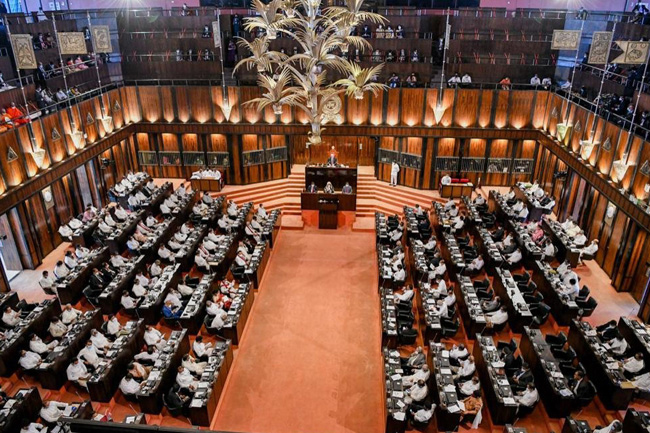
 Sri Lanka’s Parliament has passed a bill to regulate online content, amidst criticism from rights groups and opposition lawmakers, that the government is trying to crack down on dissent and stifle freedom of speech ahead of parliamentary and presidential elections this year.
The Second Reading of the Online Safety Bill was passed with a majority of 46 votes in Parliament Jan 24, with a total of 108 MPs voteing in favour, and 62 against. Sri Lanka's Sectoral Oversight Committee (SOC) on Media, Youth, Heritage and New Citizen recently approved the Online Safety Bill, subject to the amendments determined by the Supreme Court.
The country logged 8,000 cybercrimes last year, said Public Security Minister Tiran Alles, who denied the legislation would impact freedom of speech. “It is not to suppress the media or the opposition. … Any complaint will be taken up by the commission, who will be appointed by the president, and they will decide how to act,” Alles said.
The Asia Internet Coalition, an industry body including tech giants such as Google, Apple, and Meta, has called the bill a “draconian system to stifle dissent” and warned it “could undermine the potential growth of Sri Lanka’s digital economy.”
The bill facilitates the creation of a new “Online Safety Commission,” appointed by the president, that can decide what online speech is “false” or “harmful,” remove content, restrict and prohibit internet access, and prosecute individuals and organizations.
Commission-appointed “experts” would be empowered to enter and search suspects’ premises. Offenses under the law carry hefty fines and prison sentences up to five years. The United Nations human rights office said the law “could potentially criminalize nearly all forms of legitimate expression, creating an environment that has a chilling effect on freedom of expression.”
While, the collective of Information Technology (IT) and Business Process Management (BPM) industry stakeholders in Sri Lanka have also raised key concerns regarding the controversial Bill, it also has come under fire for some of its problematic aspects, with the AIC, the International Commission of Jurists (ICJ), the Bar Association of Sri Lanka (BASL), and the Human Rights Commission of Sri Lanka (HRCSL) voicing concerns.
The Asian Internet Coalition (AIC), which has Apple, Amazon, Google and Yahoo as members, warned Sri Lanka that the Bill could impact investments in the country’s information technology industry and called for extensive amendments to it.